This is an authentic Chinese garden located in Kume, west of Naha City. A stone statue of a dragon suddenly appears when you are walking along the street! For a moment, you forget that you are in Naha. The reason why there is such a stone statue is because there is an authentic Chinese garden here. Why is there a Chinese garden in Naha, Okinawa?
Point 1: A stone statue of a dragon suddenly appeared! Why was “Fuzhou Garden” created?
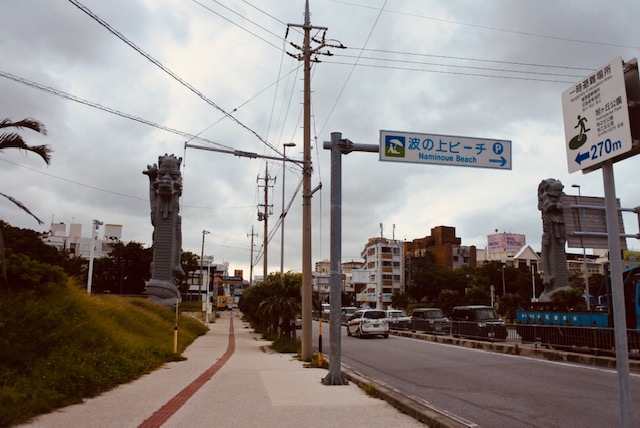
I once landed in Naha by ship, and as I was walking from the cruise terminal toward International Street, I was surprised to see a huge stone statue of a dragon suddenly appear!
According to a signboard nearby, Naha City and Fuzhou City in Fujian Province, China are friendship cities, and a Chinese garden called “Fuzhou Garden” was built to commemorate the 10th anniversary of the friendship city and the 70th anniversary of Naha City’s municipal administration.
I passed over it at the time, but was surprised when I looked it up later!
The relationship between Naha City and Fuzhou City is much older, dating back to the 14th century, which is the Kamakura period in Japan.
At that time, Okinawa was the Kingdom of Ryukyu and was very prosperous in the great trading era.
The people who supported this reflection were those who immigrated from Fuzhou.
Point 2: Why was Fukushuen established in Kume, Naha City?

At that time, people from Fujian Province in China settled in Kume, which is located west of Naha City and close to the current airport.
At that time, Kume was called Kume Village (Kuninda), and the people there were excellent navigators and interpreters.
The first public school in Ryukyu, Meirindo, was also established here in Kume Village.
Many years later, in 1992, as a sign of friendship, a Fujian-style garden was created in Kume Village, faithfully reproducing the local garden.
Point 3: Overview and Highlights of Fuzhou Garden

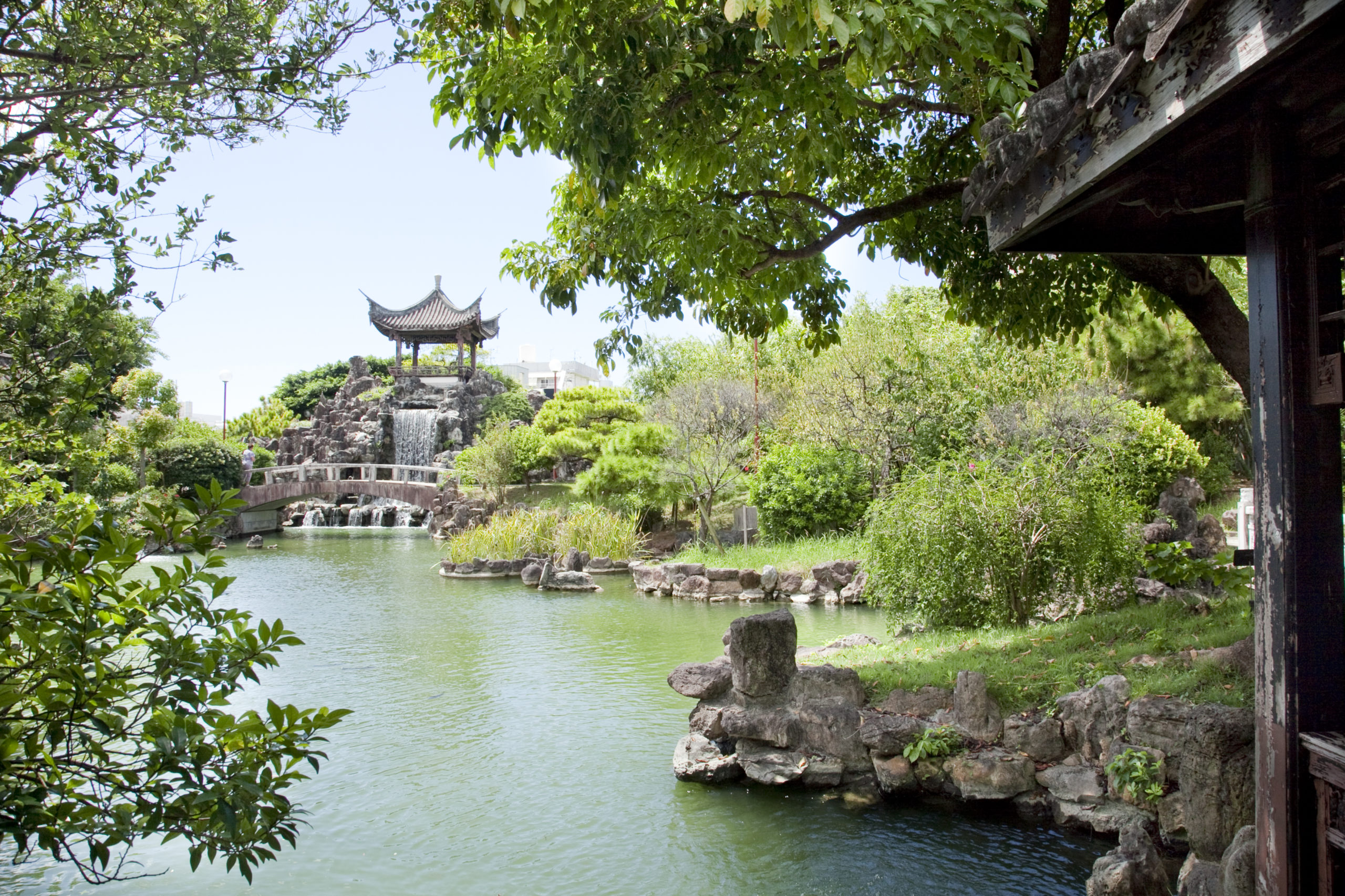
The Fuzhou Garden, covering an area of 8,500 m2, is a garden of the original scenery of Fuzhou, divided into the themes of “Ming”, “Harmonious”, and “Hua”, which symbolize the four seasons.
The gardens are connected by a walking tour path that allows visitors to visit them in turn.
The garden is full of exotic atmospheres with ponds, waterfalls, and lanterns as shown in the photo! The bridge parapets are also elaborately decorated with carvings of the twelve signs of the Chinese zodiac. The bridge parapets are elaborately carved with the twelve signs of the Chinese zodiac.
Among the bridges, “Yazan,” a famous scenic spot in Fuzhou City with a Chinese-style roof, stands out in particular.
Many of the plants that grow in the garden are also rare, such as the endangered “jade creeper,” which blooms pretty flowers.
Adjacent to the garden is a museum called “Kuninda Terrace,” an exhibition room where visitors can learn about the Ryukyu Kingdom and its relationship with Fuzhou City, as well as the history and culture of Kume Village, using a touch panel system.
And if you get tired, you can have a reasonable lunch at GOOD FARMS KITCHEN (GOOD FARMS KITCHEN), which is located on the same site. You may think that this restaurant only serves Western food, but to your surprise, they also serve Chinese food such as Abura Gon Chicken.
Lunch while enjoying the beautiful greenery will make you feel refreshed after a long day of sightseeing!
Admission: Adults 200 yen / Children 100 yen
Groups (20 or more people): Adults: 160 yen / Children: 80 yen